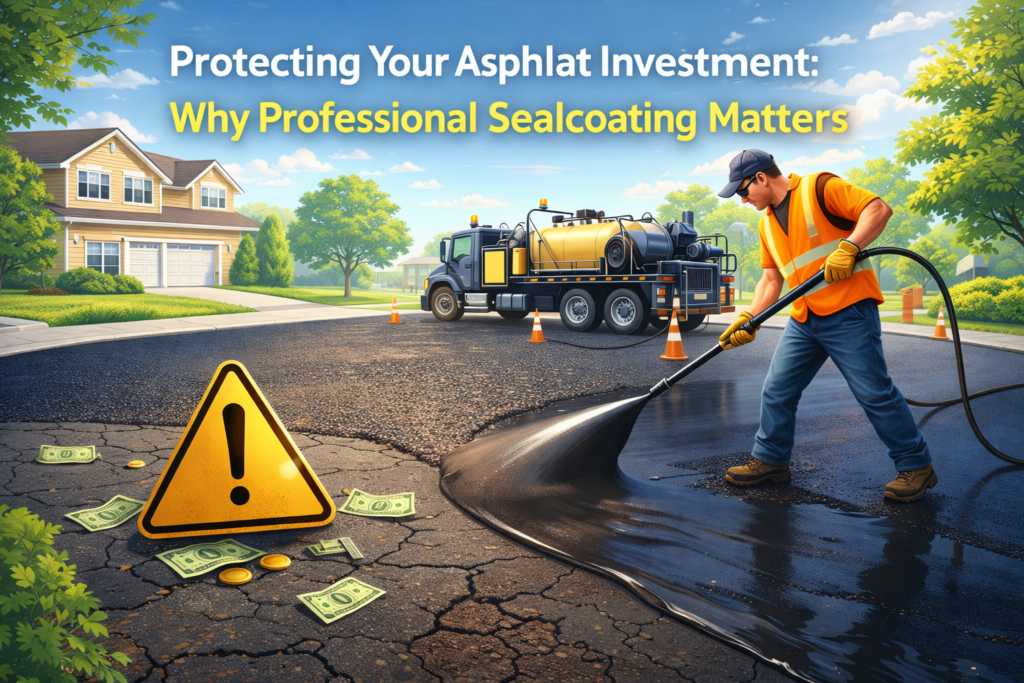
If you own property in Madison, Tennessee, you know that maintaining your asphalt surfaces is more than just an aesthetic concern—it’s a crucial investment in protecting your property’s value. Whether you’re managing a commercial parking lot, maintaining a residential driveway, or overseeing a community’s roadways, understanding the importance of professional sealcoating can save you thousands of dollars in premature replacement costs while keeping your surfaces looking pristine for years to come.
The Science Behind Asphalt Degradation
Asphalt pavement is a remarkable engineering material, but it’s not indestructible. The moment fresh asphalt is laid, it begins a slow but inevitable process of oxidation. When exposed to oxygen, UV rays, and the elements, the binding agents in asphalt—primarily petroleum-based compounds—start to break down. This oxidation causes the pavement to become brittle, leading to surface cracking that allows water infiltration.
In Middle Tennessee’s climate, this process accelerates due to our dramatic temperature fluctuations. Summer heat can cause asphalt to expand and soften, while winter freezes create contraction. This constant expansion and contraction stresses the pavement structure. When water seeps into cracks and then freezes, it expands by approximately nine percent, creating even larger fissures in what’s known as the freeze-thaw cycle. Over time, these small cracks become major structural problems that require expensive repairs or complete replacement.
What Sealcoating Actually Does
Sealcoating is essentially a protective barrier applied to asphalt surfaces. Think of it like sunscreen for your pavement. A quality sealcoat product typically consists of refined coal tar or asphalt emulsion, mixed with water, mineral fillers, and various additives that enhance performance and durability.
When properly applied, sealcoating creates a protective layer that shields the asphalt from its primary enemies: UV radiation, water infiltration, chemical spills (particularly automotive fluids), and general wear from traffic. This barrier slows the oxidation process dramatically, keeping the asphalt binders flexible and resilient. The result is pavement that maintains its structural integrity and appearance far longer than untreated surfaces.
Beyond protection, sealcoating also fills minor surface imperfections and provides a smooth, attractive finish. The deep black appearance of freshly sealcoated asphalt not only looks professional but also improves visibility of parking lines and traffic markings, enhancing safety.
The Economic Case for Regular Sealcoating
Many property owners view sealcoating as an expense rather than an investment, but the numbers tell a compelling story. Consider that replacing asphalt can cost anywhere from $3 to $7 per square foot in the Madison area, depending on the project scope and site conditions. A complete parking lot replacement for even a modest commercial property can easily run $50,000 to $100,000 or more.
In contrast, professional sealcoating typically costs between $0.15 and $0.30 per square foot, depending on the condition of the pavement and the number of coats required. For that same commercial parking lot, you might spend $2,000 to $4,000 every few years on sealcoating—a fraction of replacement costs.
More importantly, regular sealcoating can extend the lifespan of asphalt pavement from the typical 15-20 years to 25-30 years or even longer. This means postponing that major capital expenditure for years or even decades. When you calculate the return on investment, sealcoating delivers exceptional value, often paying for itself many times over through extended pavement life alone.
Why Professional Application Matters
While big-box stores sell consumer-grade sealcoating products, there’s a significant difference between a DIY approach and professional application. A Sealcoating Contractor Madison brings specialized equipment, commercial-grade materials, and technical expertise that dramatically impacts results.
Professional contractors use high-quality sealers formulated for durability and performance. They understand proper surface preparation, which is critical to adhesion and longevity. Before applying any sealer, the surface must be thoroughly cleaned of debris, vegetation, oil spots, and loose material. Professionals use industrial power blowers, pressure washers, and specialized cleaning agents to ensure optimal surface preparation.
Application technique also matters tremendously. Professionals know the correct thickness to apply—too thin provides inadequate protection, while too thick can lead to premature wear and potential tracking. They understand how weather conditions affect application and curing, and they won’t apply sealcoat when temperatures are too low or rain is imminent. They also have commercial-grade spray equipment that provides even coverage and professional squeegee techniques that ensure proper thickness and finish.
Timing Your Sealcoating Schedule
New asphalt shouldn’t be sealcoated immediately. Freshly laid asphalt needs time for the petroleum oils to cure and evaporate—typically six months to a year, depending on climate and mix design. Premature sealcoating can actually trap these oils and prevent proper curing.
Once your asphalt has properly cured, a good rule of thumb is to sealcoat every two to three years. However, this timeline can vary based on several factors: traffic volume, exposure to chemicals and automotive fluids, climate conditions, and the quality of previous applications. High-traffic commercial lots may benefit from more frequent applications, while residential driveways with minimal use might extend the interval slightly.
The best time for sealcoating in Tennessee is typically late spring through early fall when temperatures consistently remain above 50°F at night and rain is less frequent. The pavement surface should be completely dry, and the forecast should be clear for at least 24-48 hours to allow proper curing.
Beyond Sealcoating: Comprehensive Pavement Maintenance
While sealcoating is a cornerstone of asphalt maintenance, it works best as part of a comprehensive strategy. Before sealcoating, any significant cracks should be properly filled using hot rubberized crack filler. Potholes should be patched, and areas with drainage issues should be addressed. Sealcoating over major defects won’t solve underlying problems—it will only mask them temporarily.
Regular maintenance also includes keeping surfaces clean, addressing oil spots promptly (which can dissolve asphalt binders), and ensuring proper drainage to prevent water pooling. Standing water is one of asphalt’s worst enemies, accelerating deterioration and creating the perfect conditions for crack formation and expansion.
Choosing the Right Contractor
Not all sealcoating contractors deliver the same quality of work. When selecting a professional, look for established companies with verifiable references and proof of insurance. Ask about their surface preparation process, the products they use, and how many coats they apply. A quality contractor will conduct a site visit, assess your pavement’s condition, and provide a detailed proposal.
Be wary of unusually low bids—they often indicate shortcuts in preparation, inferior materials, or inadequate application. Remember that you’re making an investment in your property’s infrastructure. The difference between mediocre and excellent sealcoating work often becomes evident within the first year.
Conclusion
Your asphalt surfaces represent a significant investment in your property. Whether you’re maintaining a business parking lot or your home’s driveway, professional sealcoating offers exceptional protection and value. By understanding the science behind pavement degradation and the benefits of proactive maintenance, you can make informed decisions that extend the life of your asphalt, enhance your property’s appearance, and ultimately save money by avoiding premature replacement. In Madison’s climate, with our temperature extremes and weather variations, regular professional sealcoating isn’t just recommended—it’s essential for maximizing your asphalt investment.